

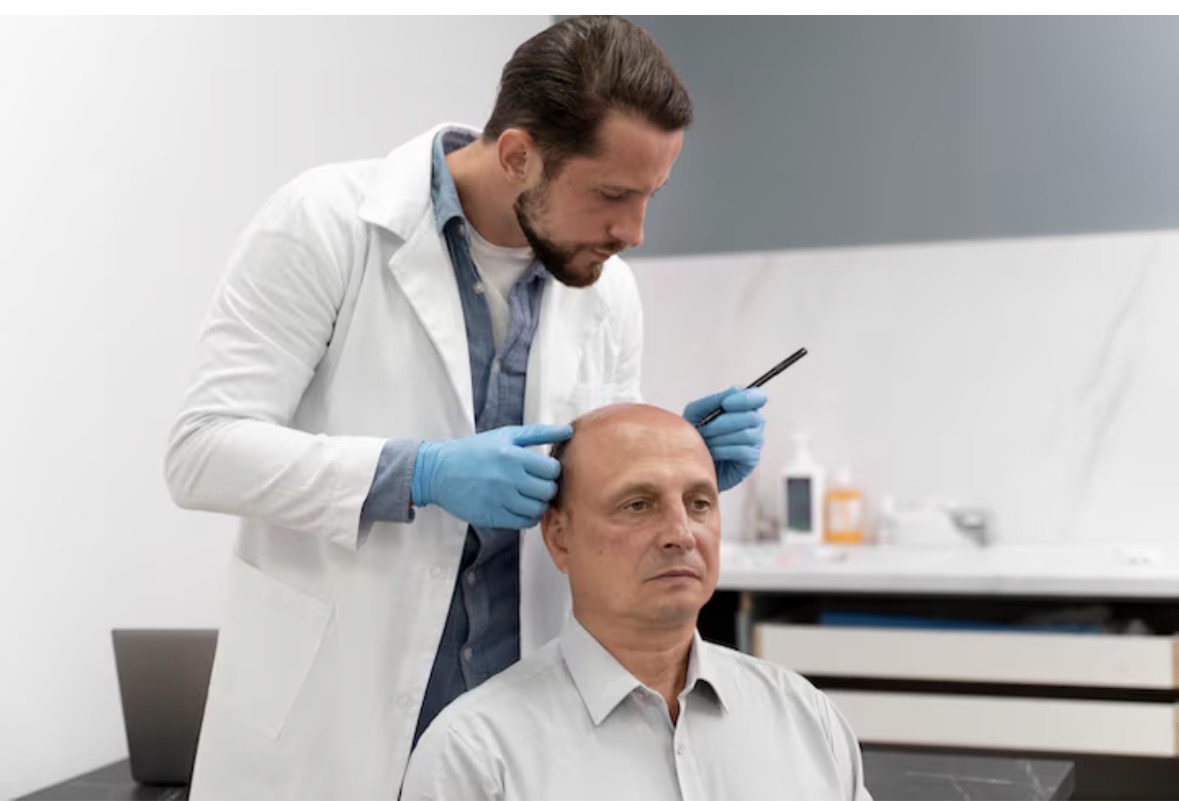
For centuries, men and women have looked in the mirror, spotted a thinning hairline, and immediately looked at their parents to assign blame. The “baldness gene” is one of the most talked-about hereditary traits, yet it is also one of the most misunderstood. Common wisdom suggests that hair loss comes strictly from the mother’s side of the family. While maternal genetics play a significant role, the reality is far more complex. Understanding the true genetic mechanisms behind hair loss is not just a matter of curiosity; it is the fundamental science that makes surgical restoration possible.
The vast majority of hair loss cases in men—and a significant number in women—are caused by Androgenetic Alopecia, commonly known as male or female pattern baldness. This condition is not caused by poor circulation, clogged pores, or wearing hats. It is a genetic sensitivity to a hormone called Dihydrotestosterone (DHT). DHT is a byproduct of testosterone. In people with the genetic predisposition for balding, hair follicles in specific areas of the scalp (usually the hairline, temples, and crown) have receptors that are hypersensitive to DHT.
When DHT binds to these receptors, it triggers a process called miniaturization. The growth phase (anagen) of the hair cycle shortens, and the resting phase (telogen) lengthens. Over time, the affected follicles shrink, producing shorter, finer, and less pigmented hairs until they eventually stop producing hair altogether. This genetic programming is why some men go bald in their 20s while others maintain a full head of hair into their 80s.
The Concept of Donor Dominance
If genetics cause hair loss, how can a transplant fix it? Wouldn’t the new hair just fall out too? This is where the concept of “Donor Dominance” comes into play. It was discovered in the mid-20th century that hair follicles taken from the back and sides of the head (the occipital and parietal regions) are genetically different from those on the top. These follicles are resistant to DHT. They do not possess the receptors that trigger miniaturization.
When a surgeon performs a hair transplantation, they are moving these DHT-resistant follicles to the balding areas. Crucially, these follicles retain their original genetic characteristics regardless of where they are placed on the scalp. A follicle taken from the back of the head will continue to grow as if it were still on the back of the head, even if it is moved to the hairline. This is why hair transplants are considered a permanent solution; the transplanted hair is genetically programmed to survive for a lifetime.
Predicting Future Hair Loss
However, genetics also present a challenge. Hair loss is rarely a static event; it is a progressive condition. A patient seeking surgery at age 25 may have stabilized their current loss, but their genetic code might dictate further thinning at age 35 or 40. This is why analyzing family history is a critical part of the consultation process at reputable clinics like Gold City. By looking at the hair loss patterns of a patient’s father, grandfathers, and older siblings, surgeons can estimate the potential extent of future baldness.
If a surgeon ignores this genetic trajectory, they risk creating a “floating island” effect. This happens when a hairline is aggressively lowered using transplanted hair, but the native hair behind it continues to recede over the years. The result is a thick band of transplanted hair at the front separated from the rest of the hair by a new bald spot. To prevent this, experienced surgeons plan for the long term, conserving donor hair for future touch-ups and often recommending medication to stabilize the native hair.
Polygenic Traits and Variability
It is important to note that hair loss is a polygenic trait, meaning it is influenced by multiple genes from both parents. This explains why two brothers can have completely different heads of hair. One might inherit the strong, DHT-resistant genes of a maternal grandfather, while the other inherits the balding pattern of a paternal uncle. This variability means that even with a strong family history of baldness, the severity and speed of your own hair loss can differ.
Genetic testing for hair loss is becoming more available, but a physical examination of the scalp is still the most reliable indicator for surgical planning. Surgeons use a device called a densitometer to check for miniaturization in the “safe donor zone.” If the hair in the donor area is also thinning (a condition called DUPA, or Diffuse Unpatterned Alopecia), the patient may not be a good candidate for surgery, as the transplanted hair would not be permanent.
The Synergy of Medicine and Surgery
Because surgery deals with the consequences of genetics but does not change your DNA, a holistic approach is often best. While the transplanted hair is safe, the native hair remains vulnerable to the genetic effects of DHT. This is why many patients choose to support theirHair transplantation with FDA-approved medications like finasteride or minoxidil. Finasteride works by inhibiting the enzyme that converts testosterone into DHT, essentially turning down the volume on the genetic signal that causes balding.
Genetics as a Blueprint, Not a Sentence
Ultimately, while you cannot change the genes you were born with, modern medicine allows you to bypass their effects. By leveraging the DHT-resistant nature of donor hair, surgeons can reconstruct what nature has taken away. Understanding that your hair transplant is a collaboration between surgical skill and your own biological blueprint helps set realistic expectations. It ensures that the investment you make today will stand the test of time, defying your genetic programming to provide a lasting, natural result.