

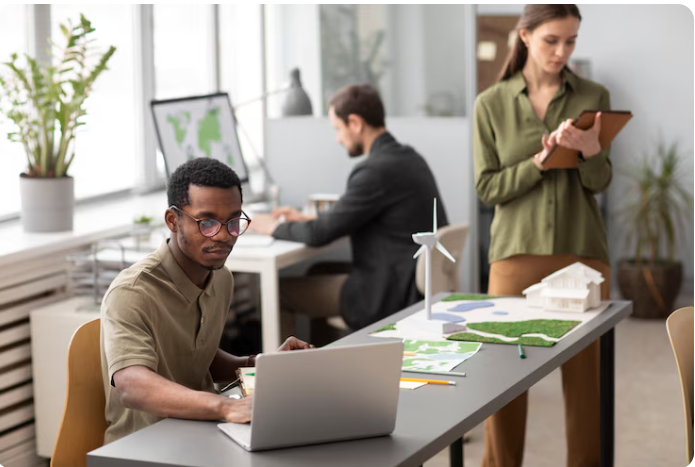
Sustainability finally matters to businesses when it comes to their workplaces – and it’s high time. As energy costs just keep going up, employees and customers are starting to expect a lot more from their workplaces, and with the environment increasingly on people’s minds, companies are taking a closer look at the buildings they’re in.
As a result, businesses are looking for ways to make their offices more efficient, comfortable and environmentally friendly – all without sacrificing productivity or the experience of the people who work in them.
Creating a sustainable workplace is about more than just chucking in some recycling bins or swapping the light bulbs for energy-efficient ones. It’s about thinking about everything – from the materials used when the place was built and refurbished, to energy use, furniture, lighting, waste and how your employees interact with the space around them.
What Really Makes a Workspace Sustainable?
There isn’t a single magic bullet that automatically makes an office sustainable.
It’s the choices you make, and usually it’s the accumulation of loads of small decisions that makes a real difference.
First up, the building itself is a big player here. Is it energy-efficient? Does it keep in the warmth and stay cool when it needs to? Does its heating and cooling system actually make sense? All these things can really make a difference to how much energy your workplace uses.
Inside the office, the materials you choose can also have a big impact. Think about furniture that will last and last, materials that have been sourced responsibly, and finishes that’ll still look the part in 10 years’ time.
Even the way you lay out your space can make a difference. Using as much natural light as possible can cut down on the need for artificial lighting during the day, and just makes the place feel brighter and more welcoming.
A genuinely sustainable workplace is all about looking at the whole system, not just chucking some green bits in here and there.
Making the Most of Natural Light
Natural light is one of the simplest, but most under-used resources an office has at its disposal – and it gets completely overlooked during the planning process.
Getting the layout right so daylight can reach more people can make a real difference – reducing the need for artificial lighting and just making the place feel more uplifting.
Furniture, partitions and any internal structures can all affect how light moves through the space, and where it’s in short supply, decent energy-efficient lighting can help cut electricity use.
And sensors and automated controls can also stop people leaving lights on in empty rooms.
These individual measures may seem small on their own, but when you add them up across a whole office, they can really start to add up.
Getting Every Last Bit of Energy Efficiency Out of Your Workplace
Heating, cooling and lighting can account for a big chunk of a building’s energy use.
So, a sustainable workplace needs to think hard about how energy is used and try to cut waste.
Efficient heating and cooling systems can keep the place comfortable without burning loads of energy. Smart controls can also let you adjust the temperature depending on how many people are around and what time of day it is.
Why heat an empty meeting room to the same temperature as a busy workspace, for example?
Technology can help with some of this, but good old-fashioned spatial planning is just as important. Creating zones that reflect how spaces are actually used can make environmental controls work a lot more effectively.
Choosing Materials That Count
The materials you choose for your office can have an environmental impact, but they can also have a practical one too.
How long they last is a key consideration here. A cheap material that breaks down all the time and needs replacing might create more waste in the long run than a more expensive one that lasts.
Firms can also look out for materials made from recycled or sustainable sources, and products that can be repaired, reused or recycled at the end of their life.
Floors, furniture, walls and all the decorative bits in between offer chances to make more responsible choices – but these choices need to be made with the environment your space is in at the time.
A product that looks like it’s doing the right thing, but turns out to be a poor performer and needs constant replacing, is unlikely to be the most sustainable option in the end.
Giving Old Furniture a New Life
One of the easiest ways to cut waste during an office refurb is to avoid chucking everything in the bin when you don’t need to.
You might be surprised at how much life is still left in existing furniture – from desks to chairs to storage systems. Some of it can be repaired, reupholstered or refinished rather than being chucked.
This can also save you a pretty penny. Reusing furniture can keep the cost of a refurb down, while stopping useful products ending up as waste.
You don’t need a whole new place to feel fresh and new. Sometimes just changing the layout, introducing some new finishes or giving a specific area a makeover can make a big difference without starting from scratch.
Designing for the Long Haul: Flexibility is a key part of making a workplace sustainable.
A place of work that can roll with the punches of your business’s changing needs is less likely to need a major rewrite every few years.
Businesses evolve, teams shuffle around, working patterns change, and some spaces go from being totally useful to being less important, while others become a lot more important. Being able to move furniture around, moving partitions about, and having rooms that can be used in loads of different ways can help your space respond to all these changes without breaking the bank on a massive construction project.
And this is not just a good workplace benefit – it’s a sustainability strategy on its own.
Helping Employees Make Sustainable Choices
Even with the most efficient workplace design, ultimately it’s the people who use it who are going to make a difference.
You can encourage people to make sustainable choices by the way you set up your facilities – things like labelled recycling bins, bike storage that actually lets you park your bike, showers for cyclists who really need a good clean, and public transport links that don’t take ages to navigate all make a big difference to people using the environmentally friendly transport options.
Kitchen and break out spaces can be designed to cut down on waste too – think reusable mugs and plates, water coolers so you can refill, and making it really easy for people to sort their rubbish properly. When you make things easy for people, they’re more likely to do the right thing and cut down on all the disposable stuff.
The bottom line is that sustainable choices have to be convenient.
If finding the recycling bin is a real pain, or the green transport option is a nightmare to get to, then people just aren’t going to bother. Consistency is key here – making sustainable choices a habit rather than a chore.
The Role of Technology
Using technology to keep an eye on how your workplace uses resources – that’s what this bit is all about.
Smart building systems can keep track of how many people are in the building at any given time, the temperature, lighting and how much energy you’re guzzling. All that data can help you spot where you’re wasting resources, so you can do something about it.
Another thing you can do is use sensors in meeting rooms to see how often people are actually using these spaces. This can be really useful in businesses that are using a mix of in-office and remote working.
If you discover that a big meeting room is never getting used, for example, maybe you could use that space in a different way.
That data can really help you make better decisions about how to use your space, and how to use resources more efficiently.
Sustainable Workplaces and Employee Experience
Sustainability and employee wellbeing – these aren’t separate things, they’re linked. In fact, many decisions that make a workplace more environmentally friendly can also make it a more pleasant place to work.
Natural light, good air, comfortable temperatures and having some nice breakout areas can all contribute to a better working environment.
If you add some greenery and natural materials into the mix, people can even feel more connected to the outdoors.
Quiet spaces, comfy seating and thinking about the acoustics can all help people get on with their work.
The end result is a workplace where sustainability and employee experience aren’t at odds with each other – they’re actually helping each other out to make a better place to work.
Reducing Waste During Refurbishment
Refurbs can be a complete waste of resources if you don’t do them right. There’s all the old furniture, flooring, partitions and lighting that’s just going to end up in the bin.
But if you take a bit of time to think about what you can reuse, donate or recycle first, that makes a huge difference. Having a good project plan can also help reduce the amount of materials that end up going in the bin because they’re not needed.
Where demolition is unavoidable, try to find ways to get rid of waste properly rather than just chucking it all in the bin.
Sustainability Can Save You Money Too
There’s a myth that sustainable workplaces always cost more – but that’s not necessarily the case.
Energy-efficient systems can end up saving you money in the long run – so will using durable materials that last longer, and not chucking them out after a few months. Using your space more efficiently, so you don’t have to rent more space, can also save you money. Plus, when you consider the upfront cost alongside the ongoing operating cost, you might be surprised at how cost-effective sustainable options can be.
The thing to look out for is that the cheap option now might not be the best value in the long run if it means higher energy bills or more repairs down the line.
Designing for the Future
The way people work is changing, and workplaces have to keep up. As more and more of us do a bit of hybrid working, and businesses become more conscious of their environmental impact, workplace planning has to be forward-thinking.
The most successful sustainable workplaces are the ones that can adapt easily – they’re efficient, but not restrictive; environmentally friendly without compromising on usability; and flexible enough to fit in with changing working patterns.
Sustainability is all about making better choices for the long term – that might mean choosing materials that last longer, keeping furniture for longer, cutting back on energy waste, or designing a space that can be adapted rather than rebuilt from scratch every time.
No magic checklist’s going to create the perfect sustainable workplace overnight. Instead, you have to build sustainability into every stage of the project from the start. For businesses setting out to plan a new office space, or looking to give their existing one a bit of an upgrade, having some expert advice on hand can do wonders in bringing all the various elements together – practical workplace needs, the environmental impact, and some idea of where your business will be in the long term.
An eco-friendly office doesn’t have to be a dull and uninspiring space; in fact just the opposite. If you take the time to consider all the different aspects of the design from the very start, you can create a place that not only looks good today but is also flexible enough to meet whatever the future brings.
If you’re a business looking to explore how it’s possible to design a workspace that not only works well for your staff but for the planet as well, then sustainable workspaces are a good place to start looking for inspiration.