
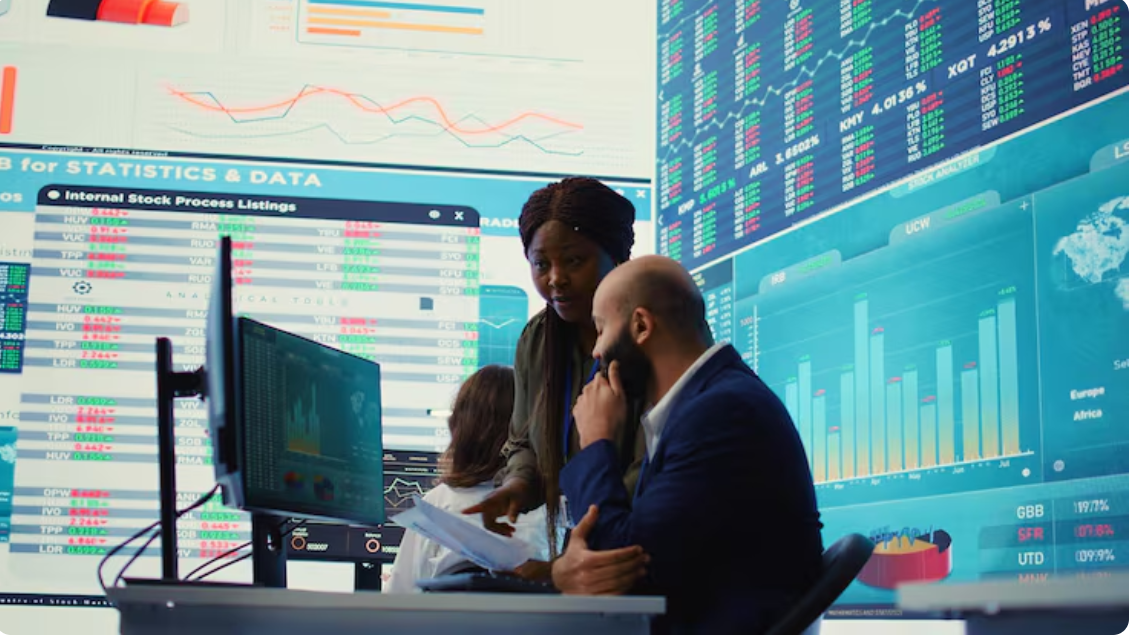
When people first enter trading, they usually focus on outcomes: profit, loss, winning streaks, and big moves. But experienced traders tend to focus on something else entirely — understanding what price is trying to communicate.
Price doesn’t speak in words. It speaks through structure, momentum, and behavior.
That’s why charting platforms are not just tools for “finding trades.” They’re tools for learning a language. And over the last decade, TradingView has become one of the most widely used platforms for learning that language across stocks, crypto, forex, futures, and bonds.
This article looks at TradingView from a fresh angle: not as a product, but as a way traders build market literacy.
The Market Is a System of Signals, Not a Story
One of the biggest traps for traders is treating markets like a storyline.
People want markets to make sense in narrative form:
- “This stock is going up because the company is strong.”
- “Bitcoin is falling because traders are scared.”
- “Gold is rising because inflation is coming.”
Sometimes those narratives are true. But markets are rarely that simple. Price often moves before the story becomes public, and sometimes it moves with no clear story at all.
That’s why many traders rely on charts. Charts are not opinions — they’re evidence.
TradingView provides a workspace where traders can focus on evidence rather than headlines.
Why Charting Is Really About Seeing Market Structure
A chart is not just a visual of price. It’s a record of how buyers and sellers behaved.
TradingView gives traders the ability to study structure in detail, such as:
- Where the market consistently rejects higher prices
- Where buyers defend a level repeatedly
- When trends accelerate or lose strength
- When volatility compresses before expansion
- How price behaves around key moving averages
This structural view matters because most trades fail not due to “bad entries,” but due to misunderstanding the context.
A breakout means something very different in a strong trend than it does in a choppy sideways market.
The Power of Multi-Timeframe Thinking
Another major concept that separates beginners from experienced traders is timeframe awareness.
New traders often analyze one timeframe only — usually the one they trade on.
More advanced traders compare timeframes to avoid making decisions in a vacuum. For example:
- The daily chart shows the dominant trend
- The 4-hour chart shows the swing structure
- The 1-hour chart reveals execution zones
- The 15-minute chart helps refine entry timing
TradingView makes multi-timeframe analysis easy because it allows rapid switching and layout customization. This encourages a more complete view of the market.
Technical Indicators: Not Magic, But Measurement
Indicators are often misunderstood.
Some people treat indicators like prediction tools. Others dismiss them completely.
In reality, indicators are measurement tools. They help traders quantify things like:
- Trend strength
- Momentum shifts
- Volatility changes
- Overbought/oversold conditions
- Volume-based confirmation
TradingView offers a large library of indicators, which makes it easier for traders to experiment and discover what aligns with their style.
The value isn’t in using “the perfect indicator.” It’s in learning how indicators behave across different market conditions.
Alerts: A Tool for Discipline, Not Convenience
A feature many traders underestimate is alerts.
Most traders assume alerts are just for convenience, but they actually serve a deeper purpose: discipline.
Instead of staring at charts and reacting emotionally, traders can set alerts for key levels and let the market come to them.
This supports a more professional approach:
- Define levels in advance
- Set alerts at those levels
- Wait for confirmation
- Avoid impulsive entries
TradingView’s alert system fits this workflow well, especially for traders who monitor multiple markets.
Pine Script and the Idea of “Rules Over Feelings”
One of TradingView’s most unique contributions is Pine Script — a scripting tool that allows users to create strategies and indicators.
Even if you never write code, Pine Script has shaped TradingView’s ecosystem by encouraging rule-based thinking.
Traders who backtest strategies learn quickly that:
- Many “good-looking” trades fail statistically
- Some boring strategies perform better long-term
- Risk management matters more than entry precision
- Market conditions change, and strategies must adapt
This pushes traders toward a more data-driven mindset.
TradingView’s Community: A Window Into How People Think
Most trading communities online are noisy and chaotic.
TradingView’s idea-sharing system is different because it’s anchored around charts. Instead of arguing abstract opinions, traders publish analysis directly on price structure.
This is useful because it reveals:
- How different traders interpret the same market
- Which levels people are watching
- How sentiment shifts across timeframes
- What scenarios traders consider likely
Even when ideas are wrong, they can be educational. They show the logic behind decisions.
Why TradingView Works Across Markets (Not Just One)
TradingView is widely used in crypto, but its broader strength is its cross-market design.
It supports analysis across:
- Stocks
- Forex
- Futures
- Bonds
- Digital assets
This matters because traders increasingly think in systems, not isolated markets.
A stock trader may watch bond yields. A crypto trader may track the dollar index. A futures trader may monitor global indices.
TradingView supports this connected approach by keeping everything under one charting umbrella.
Final Thoughts
TradingView is often described as a charting platform, but its deeper value is that it helps traders develop market literacy.
It’s a space where people learn how to read structure, measure momentum, build scenarios, and practice discipline.
Markets will always be uncertain. But traders who can interpret price clearly tend to make better decisions than those who rely on stories, hype, or luck.
To explore the platform directly, you can visit TradingView.