

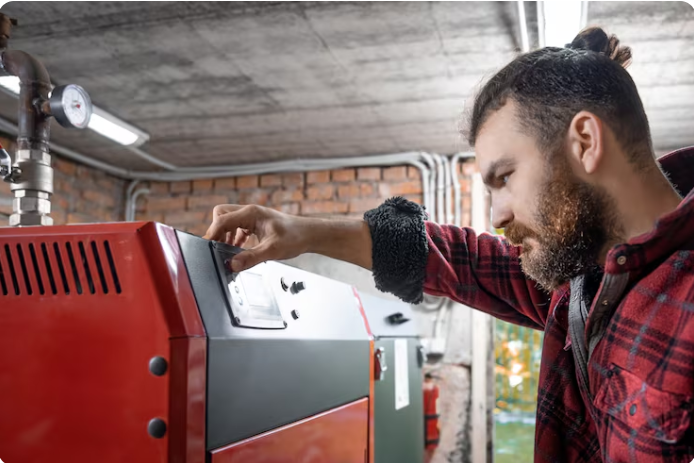
Biomass boilers have established themselves as one of the most reliable and environmentally responsible heating solutions available to homeowners and businesses across the United Kingdom. Whether you are burning wood pellets, wood chips, or logs, a biomass system offers a carbon-neutral alternative to fossil fuels and can significantly reduce your heating bills over the long term. However, like any sophisticated piece of heating equipment, a biomass boiler demands regular care and attention to keep performing at its best.
One of the most common questions we hear from biomass boiler owners — particularly those who have recently made the switch from a conventional gas or oil system — is simply: how often does this thing actually need servicing? The answer is more nuanced than a single number, and getting it right can mean the difference between a boiler that runs efficiently for decades and one that becomes an expensive source of frustration. In this article, we will walk you through the recommended service intervals, explain exactly what a professional biomass boiler service involves, and explore why staying on top of maintenance is absolutely critical for both your system’s efficiency and the validity of your warranty.
Recommended Service Intervals
The short and most widely accepted answer is that your biomass boiler should be professionally serviced at least once a year. This annual benchmark is endorsed by the vast majority of biomass boiler manufacturers operating in the UK market, including well-known names such as Windhager, Froling, Viessmann, ETA, and Hargassner. It is also the standard recommended by the Microgeneration Certification Scheme (MCS), the UK body that oversees the installation and maintenance standards for renewable energy technologies.
However, “at least once a year” is a starting point, not a universal rule. Several factors can influence how frequently your particular system needs attention:
Usage intensity is perhaps the most significant variable. A biomass boiler that serves as the primary heat source for a large rural property and runs continuously throughout the autumn and winter months will accumulate ash, soot, and clinker far more quickly than a system installed in a smaller, well-insulated home that only fires up during the coldest weeks. High-usage systems may benefit from a service every six months, particularly if the boiler operates for more than 2,500 hours per year.
Fuel type and quality also play a major role. Wood pellets of ENplus A1 grade tend to burn more cleanly and produce less ash than lower-grade pellets or wood chips. If you are using wood chips with a higher moisture content or bark content, you can expect more residue buildup inside the combustion chamber and heat exchanger, which may necessitate more frequent cleaning and inspection.
Manufacturer specifications should always be consulted. Some manufacturers stipulate very precise service schedules in their warranty documentation, and deviating from these can have serious consequences — a point we will return to later in this article. Always keep your boiler’s operation and maintenance manual accessible and review the servicing section carefully.
Seasonal timing is another practical consideration. Most heating engineers in the UK recommend scheduling your annual service during the late spring or summer months, when demand for the boiler is at its lowest. This ensures that any issues identified during the service can be addressed well before the heating season begins, reducing the risk of a mid-winter breakdown when emergency call-out costs are at their highest and parts availability may be limited.
What Does a Biomass Boiler Service Include?
A professional biomass boiler service is a far more comprehensive process than simply giving the unit a quick once-over. A thorough service carried out by a qualified and MCS-certified engineer typically takes between two and four hours, depending on the size and complexity of the system. Here is a detailed look at what you should expect:
Visual inspection and operational assessment. The engineer will begin by examining the overall condition of the boiler, its surrounding area, and all visible pipework and connections. They will check for any signs of corrosion, leaks, or physical damage. The boiler will be fired up and observed through a full heating cycle to assess combustion quality, ignition reliability, and general operational behaviour.
Combustion chamber cleaning. Over time, ash and clinker deposits build up on the walls and grate of the combustion chamber. These deposits insulate the chamber walls, reducing heat transfer efficiency and potentially causing uneven burning. The engineer will remove all accumulated ash, scrape away hardened clinker, and inspect the refractory lining for cracks or deterioration.
Heat exchanger cleaning. The heat exchanger is the component responsible for transferring thermal energy from the combustion gases to the water circulating through your heating system. Soot and fly ash deposits on the heat exchanger surfaces act as an insulating barrier, dramatically reducing efficiency. The engineer will clean the heat exchanger tubes or plates using specialised brushes, compressed air, or vacuum equipment to restore optimal heat transfer.
Flue and chimney inspection. A clear and properly functioning flue is essential for safe operation. The engineer will inspect the entire flue run for blockages, soot buildup, and structural integrity. They will check that the flue terminal is unobstructed and that the drought is within the manufacturer’s specified range. Poor drought can lead to incomplete combustion, increased emissions, and dangerous carbon monoxide production.
Fuel feed system check. The auger, hopper, and any vacuum or conveyor feed mechanisms will be inspected for wear, blockages, and proper calibration. A malfunctioning feed system can cause irregular fuel delivery, leading to poor combustion, flame instability, and excessive fuel consumption.
Electrical and control system testing. All sensors, thermostats, actuators, and control panels will be tested for accuracy and responsiveness. The engineer will verify that safety cut-outs, over-temperature protection, and flame monitoring systems are functioning correctly. Software or firmware updates may also be applied if the manufacturer has released improvements since the last service.
Seals, gaskets, and door mechanisms. The integrity of all door seals and gaskets will be checked to ensure that the combustion chamber remains airtight during operation. Worn or damaged seals allow excess air to enter the chamber, disrupting the carefully calibrated air-to-fuel ratio and reducing combustion efficiency.
Emissions testing. Many service visits include a flue gas analysis to measure carbon monoxide, carbon dioxide, oxygen, and particulate levels. These readings provide a clear picture of combustion efficiency and help the engineer fine-tune the boiler’s air supply settings for optimal performance.
Ash removal system check. If your boiler is equipped with an automatic ash removal system or ash compactor, this will be inspected and cleaned to ensure it is operating smoothly.
Why Regular Servicing Matters for Efficiency
The efficiency of a biomass boiler is not a fixed figure — it is a moving target that degrades over time if the system is not properly maintained. A brand-new, well-installed biomass boiler can achieve efficiencies of 90 to 95 percent, meaning that the vast majority of the energy locked in the fuel is successfully converted into usable heat. However, without regular servicing, that figure can drop significantly.
Soot accumulation on the heat exchanger is the single biggest culprit. Even a thin layer of soot — as little as one millimetre — can reduce heat transfer efficiency by several percentage points. Over the course of a heating season, this translates into noticeably higher fuel consumption and higher running costs. In practical terms, a poorly maintained biomass boiler may burn 10 to 20 percent more fuel than a properly serviced one to deliver the same amount of heat to your home.
Inefficient combustion also produces higher levels of particulate matter and carbon monoxide, which is not only an environmental concern but a genuine health and safety risk. Regular servicing ensures that your boiler burns fuel as cleanly and completely as possible, minimising harmful emissions and keeping your property safe.
Furthermore, neglecting maintenance accelerates wear on critical components such as the combustion grate, auger motor, and ignition element. Replacing these parts prematurely is far more expensive than the cost of an annual service, making regular maintenance a sound financial investment as well as a technical necessity.
Why Regular Servicing Matters for Warranties and Compliance
Beyond efficiency, there is a compelling legal and financial reason to stay on top of your biomass boiler’s service schedule: your warranty. Virtually every biomass boiler manufacturer in the UK makes warranty coverage conditional on the owner being able to demonstrate that the system has been serviced at the recommended intervals by a qualified engineer. If your boiler develops a fault and you cannot produce a valid service record, the manufacturer is within their rights to void the warranty entirely, leaving you to cover the full cost of repairs or replacement out of pocket.
This is particularly important for UK homeowners who have installed their biomass boiler under government incentive schemes. While the original Renewable Heat Incentive (RHI) is now closed to new applicants, many existing participants are still receiving quarterly payments, and ongoing compliance with MCS maintenance standards is a condition of continued eligibility. Similarly, if you have taken advantage of the Boiler Upgrade Scheme (BUS) or any other grant funding, failing to maintain your system properly could jeopardise your compliance status.
From an insurance perspective, many home insurance policies require that heating systems be maintained in accordance with manufacturer guidelines. In the event of a fire or carbon monoxide incident linked to a poorly maintained biomass boiler, an insurer may refuse to pay out if they determine that negligence in servicing contributed to the problem.
Signs Your Biomass Boiler Needs Attention Between Services
While annual servicing is the baseline, you should not wait for your next scheduled appointment if you notice any of the following warning signs: unusual noises from the combustion chamber or auger, a noticeable increase in fuel consumption, excessive smoke or dark emissions from the flue, frequent shutdowns or error codes on the control panel, uneven heating throughout your property, or a visible buildup of ash and soot around the boiler. Any of these symptoms suggests that something is not operating as it should, and a prompt inspection by a qualified engineer can prevent a minor issue from escalating into a costly repair.
Book Your Biomass Boiler Service with Proadvance
If you are a biomass boiler owner in the South East of England and you want to ensure your system is running safely, efficiently, and in full compliance with your warranty obligations, the team at Proadvance is here to help. Based in Reading, Berkshire, Proadvance specialises in the professional servicing, maintenance, and repair of biomass heating systems for both domestic and commercial clients. Their MCS-certified engineers bring years of hands-on experience with all major biomass boiler brands and can tailor a maintenance plan to suit your specific system and usage patterns.
Do not wait until the depths of winter to discover that your boiler is underperforming or, worse, has broken down entirely. Contact Proadvance today to book your biomass boiler service and enjoy the peace of mind that comes from knowing your renewable heating system is in expert hands. Visit their website or call their friendly team in Reading to arrange a convenient appointment — your boiler, your wallet, and the environment will all thank you for it.