

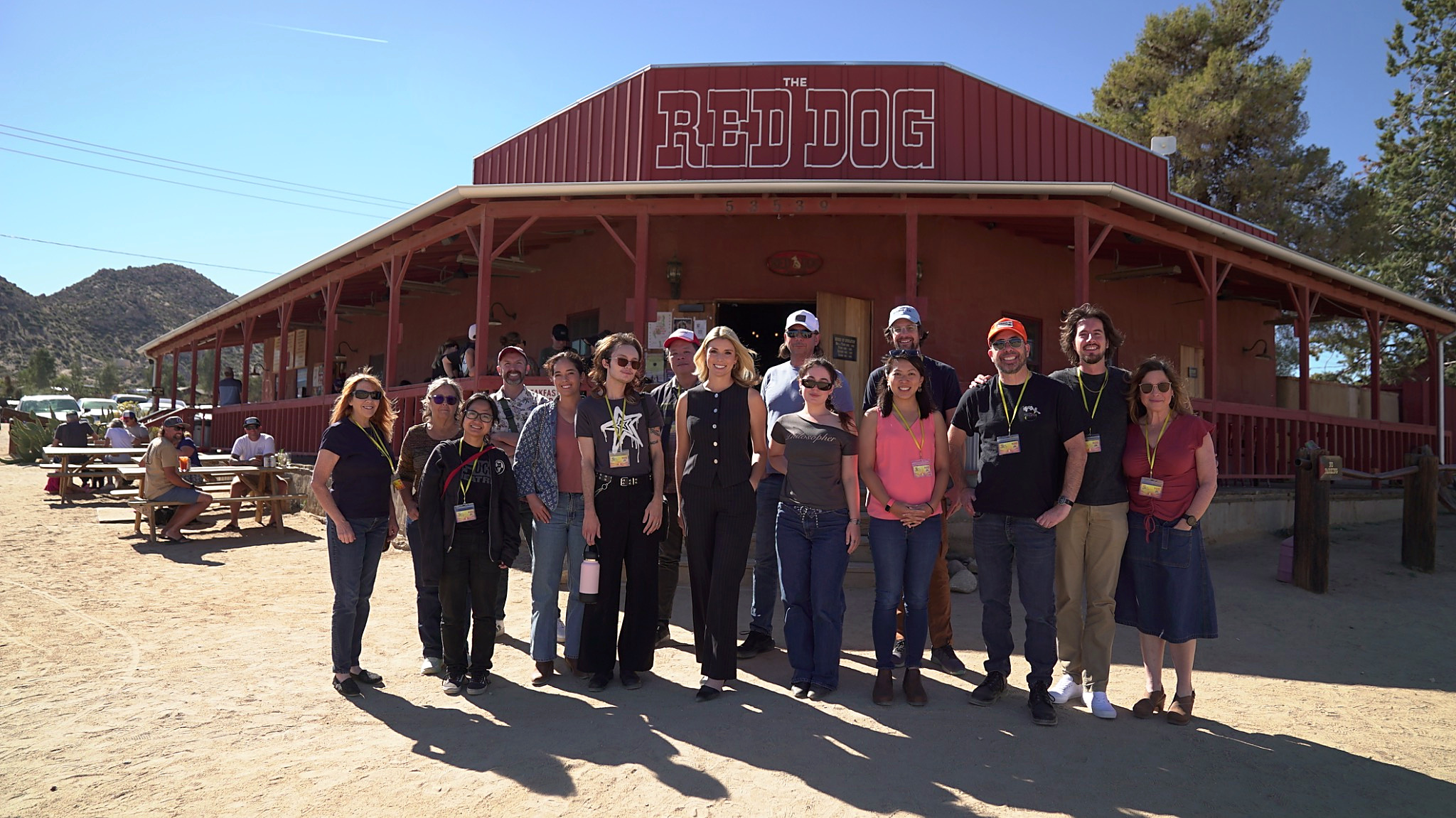
In Yucca Valley, California, near Joshua Tree National Park, international filmmakers are finding something that has become increasingly rare in the film industry: an audience, genuine connections, and the simple fun of making movies.
There are few things more Hollywood than a film festival full of people trying to look as though they are not trying too hard. Which is why a little event in California’s Hi-Desert caught my attention. In Yucca Valley, a couple of hours from Los Angeles, filmmakers are turning up from around the world, not to compete for the most exclusive party invitation, but to show their films, meet an actual audience and, apparently, have a rather good time doing it.
INTERNATIONAL GATEWAY
The Yucca Valley Film Festival returns with 52 films screening from November 4 to 8. The festival received more than 600 submissions this year from 34 different countries. That is quite a reach for an event of its size. This year’s lineup includes a handful of recognisable Hollywood faces, international animation and independent films with something to say. The festival has previously welcomed Rosanna Arquette and William Baldwin, as well as films starring Iggy Pop, Gérard Depardieu, Danny Trejo and Alex Pettyfer. So, amid the familiar discourse that Hollywood is dying (again), what is the appeal here? What makes the desert a gathering place for filmmakers? It is not glamour chasing. So what is it?
Yucca Valley, near Joshua Tree National Park, has a long relationship with the film industry. The surrounding Hi-Desert has attracted filmmakers looking for landscapes and breathing room beyond Los Angeles. Pioneertown, originally built as a Western movie set, remains a reminder of the area’s cinematic past and its continued appeal, even if it has since become a major tourist attraction rather than an active film set. Nestled between Las Vegas and Palm Springs, this part of the Mojave Desert continues to attract artists, musicians and film crews, many of whom choose to live there. The festival is tapping into that history while building something of its own.

MORE PERSONAL, NOT BIGGER
At YVFF, the idea is that a film should not disappear into a program of hundreds of competing titles. Every filmmaker is given opportunities to introduce their work, meet audiences and talk about what they have made. That might sound obvious, but anyone who has attended a large festival knows that getting people to actually notice your film can be half the battle.
The 2026 program offers plenty of reasons to look beyond the usual festival circuit. Woozy, the feature directorial debut of Joey Bicicchi, stars Emile Hirsch (Into the Wild), Penelope Mitchell and Jackie Cruz. Crystal Cross, written and directed by musician Richie Follin, is a darkly comic road movie that won the Audience Award for Best Comedy at Austin Film Festival in 2025. It was also filmed in the surrounding desert, giving the film a particularly local connection.
There is familiar television talent, too. Next in Line stars Tatiana Maslany, known for Orphan Black and She Hulk, while The Long Con features Oliver Stark from 9 1 1 and Nava Mau from Baby Reindeer. And then there are the Smurfs. The franchise has chosen YVFF for a third consecutive year to screen material from its latest season, a rather unexpected recurring connection between a major European animation property and a small desert community thousands of miles away.
BACK TO BASICS
Still, the festival’s most interesting feature may be what happens away from the screen. Filmmakers, all of them, regardless of status or name recognition, sit behind a picture signing table, where audiences can approach them, ask questions and get to know the people behind the work. There are industry gatherings, drinks, parties and conversations, but the organisers are not trying to turn every encounter into a networking performance. They are not chasing the glitz.
Festival director Matt Beurois says the aim is to bring filmmaking back to its basics: discovering movies, meeting the people who make them and enjoying the experience. Professionals return not only to support the event, but to discover new talent and reconnect with their own original enthusiasm for cinema.

SEEDS OF OPPORTUNITIES
Those meetings can have a life beyond the festival. Filmmakers who first crossed paths in Yucca Valley have gone on to collaborate on films, music videos and animated projects. Several have returned to present their next films. For independent artists, that can be far more meaningful than simply adding another screening to a CV.
The festival is also free to attend, another rarity in a country where almost everything seems to come with a price tag. Visitors do not need to pay for an expensive festival pass, and local residents can come and go, meeting artists throughout the event without an industry badge or a Hollywood connection. Local filmmakers appear alongside international selections, creating a space where the community is not merely watching the film industry from a distance, but taking part in it.
The festival’s main sponsor is the Town of Yucca Valley, which has supported the event for eight consecutive years. Did I mention that was a rarity, too? The traditional three day festival at the Town’s Community Center is now expanding to five days, with additional screenings on November 4 and 5 organised with the Joshua Tree Film Office.
In an industry where everything can feel like a competition for attention, Yucca Valley’s approach is quietly different. It is not trying to be Cannes in the desert. It is offering filmmakers something rather more personal: an audience that listens, a community that welcomes them, and the possibility of meeting someone who might help make their next film.
And frankly, that sounds like a pretty good reason to make the trip.