


Most legal clients do not choose a lawyer in a calm, neutral state. They are worried about a dispute, a charge, a contract, an accident, a family problem, a business risk, or a deadline they do not fully understand. Before they call, they usually search. They compare law firm websites, attorney bio pages, legal directories, reviews, bar listings, and LinkedIn profiles.
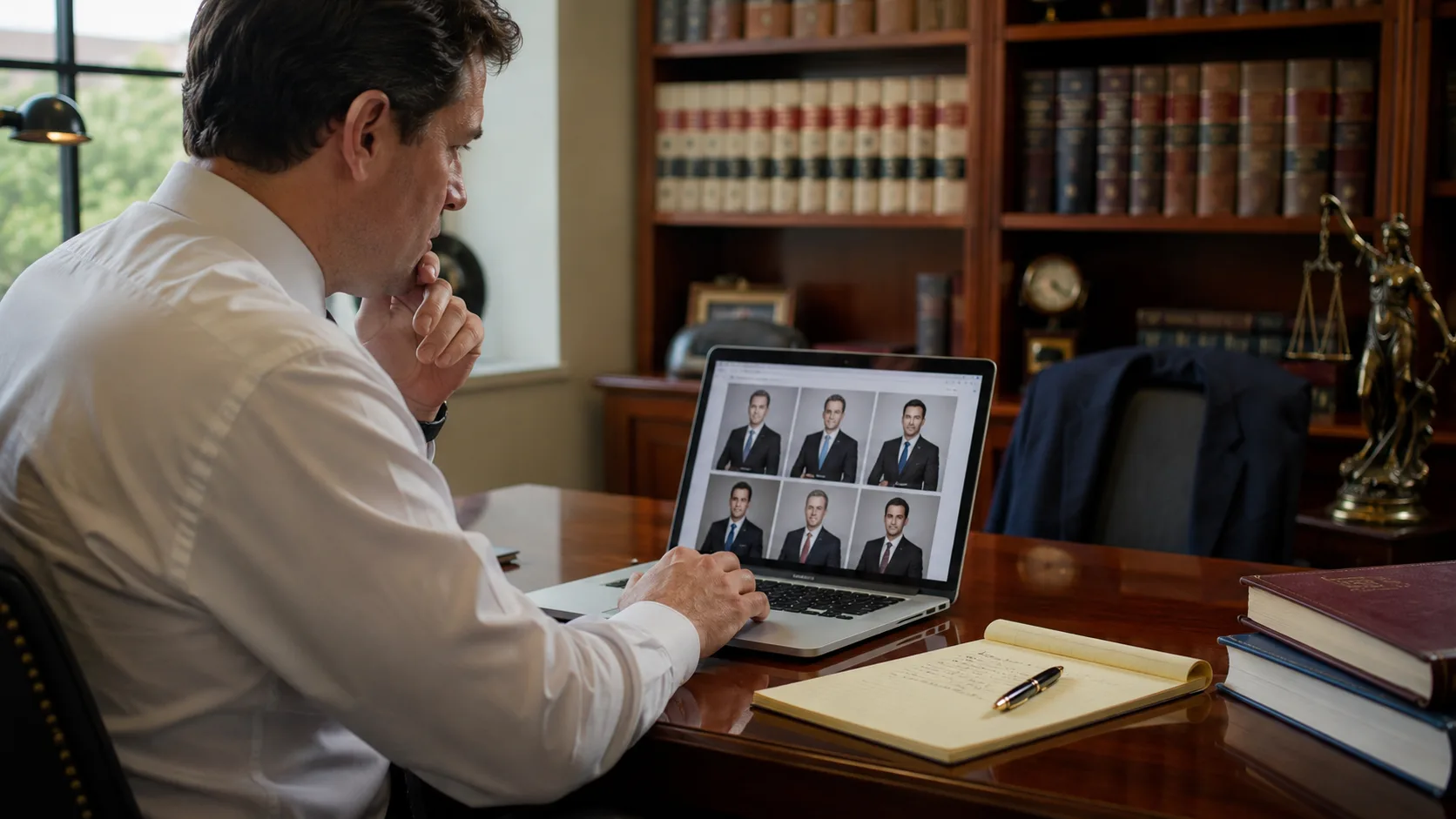
In that search process, a lawyer’s photo is not decoration. It is part of the first screen of evidence a potential client evaluates. The client is asking a practical question: does this person look like someone I can trust with a serious issue?
That does not mean a headshot proves legal skill. It does not. Credentials, experience, case fit, communication style, and reputation matter more. But lawyer headshots still shape the first impression around those facts. A weak, dated, casual, or missing photo can make an otherwise strong profile feel unfinished.
For attorneys and law firms, the headshot has become a small but important piece of client intake.
Legal clients research before they reach out
A person looking for legal help often starts with uncertainty. They may not know the difference between a personal injury lawyer, an employment lawyer, a family lawyer, a criminal defense attorney, or a business lawyer. They may not know what their problem is worth, what documents they need, or how urgent the matter is.
So they scan. They look for signs of competence. A clean attorney bio helps. Clear practice areas help. Reviews help. So does a professional photo that makes the lawyer feel real and approachable.
When there is no photo, the profile can feel anonymous. When the photo is poor, the profile can feel neglected. A cropped wedding image, harsh office lighting, a ten-year-old portrait, a phone selfie, or a photo that looks too casual for the practice area can create hesitation.
The client may not consciously think, “This headshot is bad.” More often, they just keep comparing. Another lawyer’s profile feels more complete, more current, or easier to trust.
That is the quiet risk. The headshot does not lose the client by itself. It simply fails to support the rest of the profile.
A legal headshot has to balance authority and approachability
Lawyers have a harder job than many other professionals when choosing a profile photo. The image has to project authority, but not coldness. It has to look serious, but not intimidating. It has to fit the legal profession, but also the specific type of client the lawyer wants to attract.
A corporate attorney may need a more formal tone. A criminal defense attorney may want composure and confidence. A family law attorney may benefit from a warmer expression. An estate planning lawyer may need to look steady and patient. A startup lawyer may lean slightly more modern while still looking credible.
This is why one generic studio shot is not always enough. The right image depends on the practice area, the firm’s brand, and the emotional state of the client at the moment of search.
Good lawyer headshots usually share a few traits. The face is clear. The lighting is clean. The clothing is structured. The expression feels calm and alert. The background supports the profession without becoming theatrical. A bookshelf, boardroom, courthouse-adjacent office, or neutral studio setting can work if the image still feels current.
The point is not to look dramatic. The point is to remove doubt. For firms or solo attorneys who need a fast way to create several polished options, this lawyer headshot tool is built around legal use cases such as law firm attorney bios, Avvo and Martindale-Hubbell profiles, bar association directories, LinkedIn profiles, legal directory listings, and speaking engagement bios.
Where lawyer headshots actually get used
Many attorneys think of their headshot as a law firm website asset. That is only the beginning. The same photo may appear on attorney bio pages, Avvo and Martindale-Hubbell profiles, bar association directories, LinkedIn, legal directory listings, conference bios, podcast guest pages, local news quotes, and court-related submissions.
Each platform handles images differently. A law firm bio may use a large portrait. A legal directory may crop the image into a small square. LinkedIn turns it into a circle. A conference page may need a high-resolution press-style version. A local article may pull the photo into a layout the lawyer does not control.
That means the photo needs to travel well. It should still look strong when cropped tightly. It should be readable at a small size. It should avoid distracting backgrounds, busy clothing, or lighting that only works in one context.
The wrong photo can make the practice feel dated
Legal marketing often changes slowly. That can be an advantage. Clients do not usually want a lawyer who looks like they are chasing trends. But there is a difference between timeless and outdated.
An old headshot can make a profile feel stale. A dark background from a decade ago, a low-resolution image, a stiff pose, or heavy retouching can pull attention away from the lawyer’s experience. A client may wonder whether the website is maintained, whether the lawyer is still active in that role, or whether the practice is behind in other ways.
This matters because legal clients already feel unsure. They are trying to decide who can help them understand a process that may be expensive, emotional, or risky. A current, professional image makes the profile feel more maintained.
Casual photos create a different problem. They may make the lawyer look friendly, but they can weaken the sense of seriousness. A business client reviewing a contract dispute may not want a vacation crop. A personal injury client may not want a photo that looks like it came from a social media feed. A criminal defense client may need reassurance that the lawyer is composed under pressure.
The photo should match the legal stakes.
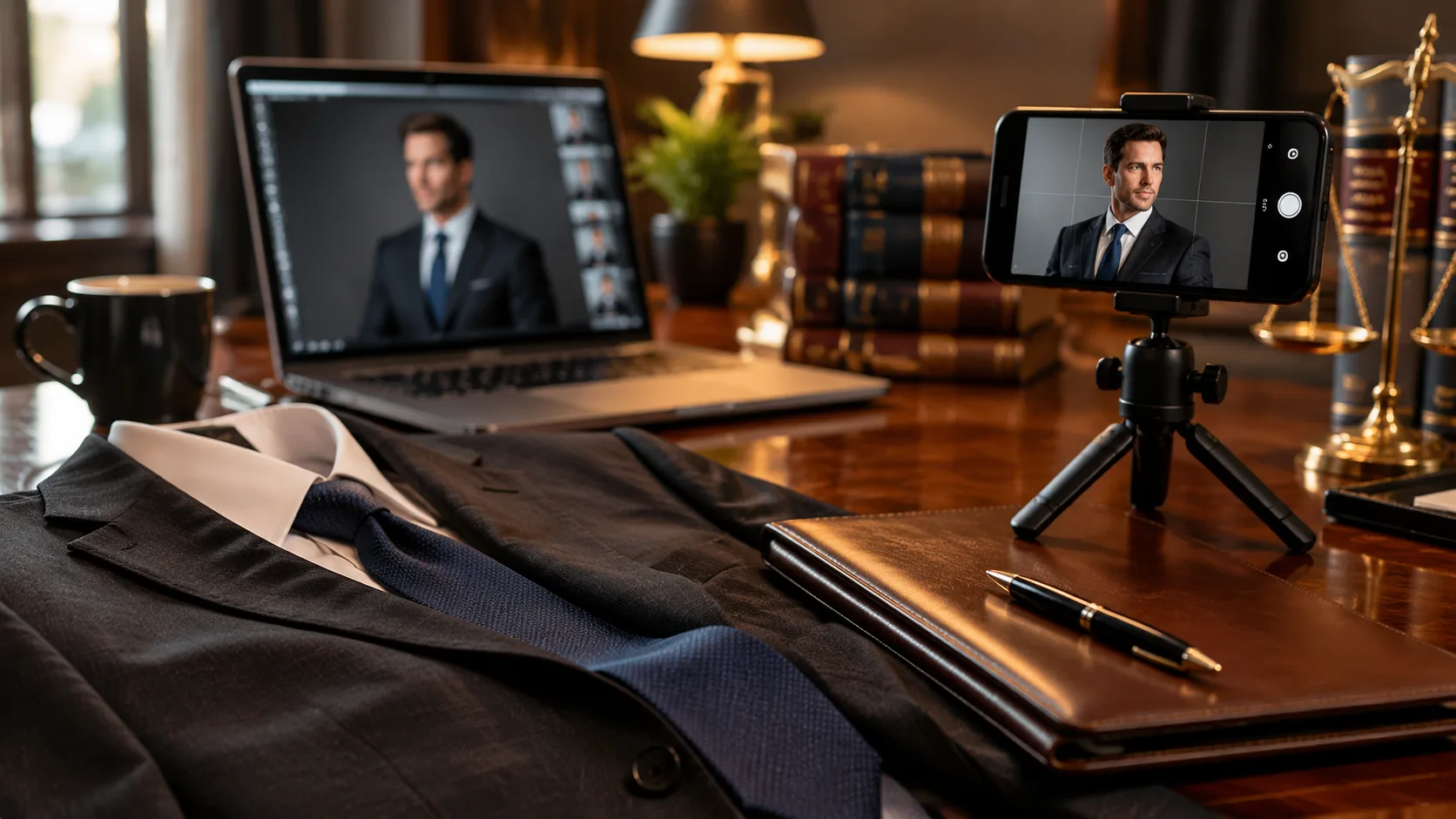
Consistency matters across a law firm
One good attorney portrait is useful. A consistent firm-wide set is stronger.
Law firm websites often suffer from visual patchwork. One partner has a polished studio portrait. Another attorney has an old black-and-white photo. A newer associate has a phone photo. A staff member has no image. The firm may be highly capable, but the team page feels uneven.
Potential clients notice that inconsistency even if they cannot explain it. A team page with consistent lighting, framing, clothing standards, and background style feels organized. It suggests the firm pays attention to details. That matters in a profession where details are part of the service.
Consistency also supports referrals. When another professional sends a client to a firm page, the visual standard should make the introduction feel stronger, not weaker. The same applies to speaking events, legal panels, local media quotes, and professional association profiles.
A firm does not need everyone to look identical. Different lawyers should keep their own presence and personality. But the overall quality level should feel intentional.
AI headshots changed the logistics
Traditional photography still has a place. A large law firm rebrand, partner retreat, or coordinated marketing campaign may deserve a professional photographer. But many attorneys are not avoiding new headshots because they dislike photography. They are avoiding the logistics.
Scheduling is the problem. Lawyers have court dates, client calls, filings, depositions, travel, and meetings. Getting everyone into a studio on the same day can be difficult. For solo attorneys, taking half a day for a photo shoot may feel hard to justify.
AI headshots have changed that practical calculation. They make it easier to generate several polished versions from existing photos, then choose the one that fits the practice. The tool does not replace judgment. A lawyer still has to reject anything that looks unnatural, too casual, too glossy, or unlike the person a client will meet.
ProfessionalHeadshot.io says users upload 5 to 20 selfies, choose styles, and receive 40 to 100 polished headshots. The site lists 30+ outfit styles, 14 backgrounds, 3 pose angles, commercial usage rights, and pricing that starts at $29. Its lawyer page also compares traditional studio shoots at $300 to $800 with AI-powered delivery from $29.
For a solo attorney, small firm, or distributed legal team, that can make updating headshots feel like normal profile maintenance instead of a special project.
How to choose the right attorney photo
Start with the client. A headshot is not mainly about choosing the image the lawyer likes best. It is about choosing the image that makes sense for the client conversation.
For litigation, criminal defense, corporate, or injury matters, a darker suit, clean background, and composed expression often work well. For family law, estate planning, immigration, or employment matters, a slightly warmer expression may help the profile feel less intimidating. For tech, startup, or creative business law, the photo can be modern without becoming casual.
Next, test the crop. The image should work as a large website photo and as a small directory thumbnail. If the face disappears at a small size, the photo is not strong enough for modern legal platforms.
Then compare it with the firm standard. If the image is much brighter, darker, warmer, colder, more formal, or more casual than everyone else’s photo, it may create imbalance on the team page.
Finally, check whether the photo looks current. If the lawyer has changed appearance, role, practice area, or firm branding, the old image may no longer fit.
When lawyers should refresh their headshots
Most attorneys do not need new headshots every few months. That would be excessive. But waiting six or seven years is usually too long.
A practical rhythm is every two to three years, or sooner after a meaningful change. Refresh the photo after joining a new firm, making partner, launching a solo practice, changing practice focus, updating the firm website, speaking publicly more often, or expanding into a new market.
Firms should also review headshots when adding new attorneys. If new photos make older ones look dated, it may be time for a broader refresh. The goal is not vanity. It is keeping the firm’s public record aligned with the work it is doing now.
The first consultation starts before the call
The first consultation does not really begin when the client speaks to the lawyer. It begins when the client searches, compares, clicks, and decides whether to make contact.
A lawyer headshot is one small part of that decision. It will not prove competence, win a case, or replace a strong reputation. But it can make a legal profile feel more complete, credible, and human.
For attorneys, that is enough reason to treat the photo as part of client communication. The law may be complex, but the first visual signal is simple: this is the person you are trusting with something serious.