

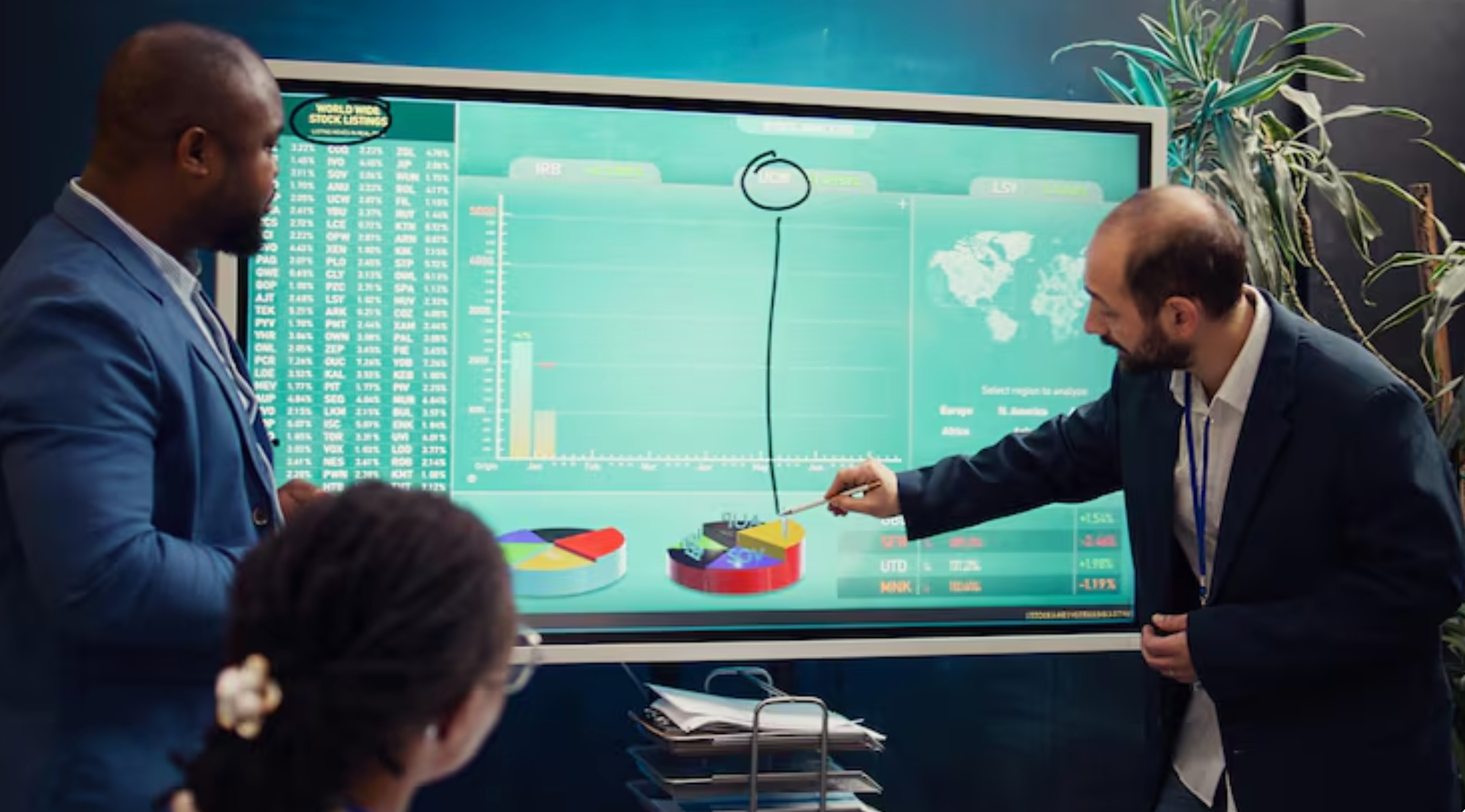
Financial markets have always been driven by information—but the way traders access and interpret that information has changed dramatically over the past decade. What once required multiple terminals, spreadsheets, and manual calculations can now be done through unified platforms that bring data, visualization, and analysis together in one place.
At the center of this shift is the growing importance of charting and technical analysis tools, which help traders move beyond raw numbers and start recognizing patterns, trends, and behaviors across different markets.
The Shift from Data Overload to Data Clarity
One of the biggest challenges for traders today isn’t a lack of data—it’s too much of it. Prices, volumes, indicators, news events, and sentiment signals all compete for attention. Without the right structure, this information can quickly become overwhelming.
Modern platforms like TradingView address this issue by transforming complex datasets into visual formats that are easier to interpret. Instead of scanning rows of numbers, traders can use charts to identify support and resistance levels, trend directions, and potential reversal points.
This visual approach doesn’t just simplify analysis—it makes it more intuitive and repeatable.
Why Multi-Asset Analysis Matters More Than Ever
Markets are no longer isolated. Movements in one asset class often influence others. For example:
- Rising interest rates can impact both stocks and forex markets
- Cryptocurrency trends may correlate with tech stock performance
- Commodity price shifts can affect currency strength
Because of this interconnected environment, traders increasingly rely on tools that allow cross-market comparisons. The ability to analyze stocks, forex pairs, crypto assets, and commodities within a single interface provides a broader perspective that was once difficult to achieve.
Understanding these relationships is now considered a key part of building a well-rounded trading strategy.
The Role of Technical Indicators in Decision-Making
Technical indicators have long been a cornerstone of market analysis, but their application has evolved. Today’s traders don’t just use indicators in isolation—they combine multiple signals to form a more complete picture.
Some commonly used approaches include:
- Momentum indicators to assess market strength
- Moving averages to identify trends
- Volatility measures to anticipate price swings
What makes modern platforms powerful is not just the availability of these indicators, but the ability to customize them. Traders can adjust parameters, layer indicators, and even create their own scripts to test unique strategies.
This flexibility allows for deeper experimentation and more personalized analysis.
Turning Ideas into Testable Strategies
One of the most significant advancements in trading technology is the ability to backtest strategies. Instead of relying solely on intuition, traders can now test their ideas against historical data to see how they would have performed.
This process helps answer critical questions:
- Does a strategy work consistently across different market conditions?
- How does it perform during high volatility?
- What level of risk is involved?
Backtesting doesn’t guarantee future success, but it provides a structured way to evaluate ideas before applying them in live markets. Over time, this leads to more disciplined decision-making.
The Importance of Alerts and Automation
Markets move quickly, and it’s not always possible to monitor them continuously. This is where alerts and conditional triggers come into play.
Instead of watching charts all day, traders can set conditions such as:
- Price reaching a specific level
- An indicator crossing a threshold
- A breakout from a defined range
When these conditions are met, the system sends a notification. This allows traders to stay informed without constant screen time.
Automation also helps reduce emotional decision-making. By predefining rules, traders can follow a consistent process rather than reacting impulsively to market movements.
Visual Thinking and Pattern Recognition
Human brains are naturally wired to recognize patterns, which is why charting remains such a powerful tool. Over time, traders learn to identify recurring formations such as:
- Trends and channels
- Breakouts and consolidations
- Reversal patterns
These patterns don’t guarantee outcomes, but they provide a framework for understanding market behavior. Combined with data and indicators, they help traders form more structured hypotheses about where prices might move next.
Community and Shared Market Insights
Another notable development in modern trading platforms is the integration of community-driven insights. Traders can share charts, publish ideas, and discuss strategies with others around the world.
This creates a collaborative environment where:
- Beginners can learn from experienced traders
- Different perspectives can challenge assumptions
- Market ideas can be refined through discussion
While not all shared insights are reliable, the ability to explore diverse viewpoints adds another layer to the analytical process.
Balancing Tools with Judgment
Despite all these technological advancements, one thing remains unchanged: tools are only as effective as the person using them.
Charts, indicators, and alerts provide structure, but they don’t replace critical thinking. Successful traders combine these tools with:
- Risk management principles
- Clear trading plans
- Continuous learning
In other words, technology enhances decision-making—but it doesn’t make decisions on its own.
Final Thoughts
The evolution of trading platforms reflects a broader trend in finance: the move toward accessibility, efficiency, and data-driven analysis. By bringing multiple markets, tools, and insights into a single environment, modern solutions help traders focus less on gathering information and more on interpreting it.
As markets continue to evolve, the ability to analyze data clearly, test strategies effectively, and maintain discipline will remain at the core of successful trading—regardless of the tools being used.