

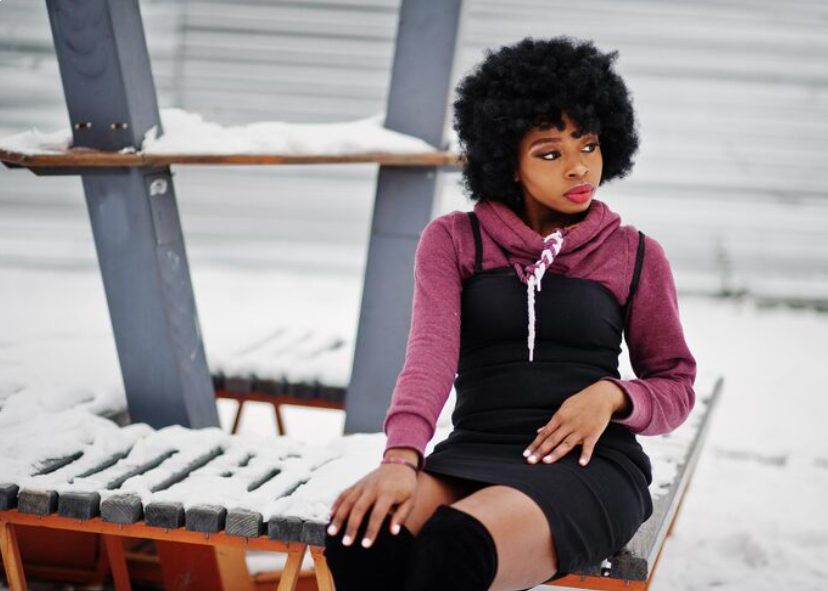
An all-black outfit can be easy to assemble and surprisingly difficult to finish. Each piece looks fine on its own, yet together the clothes can seem like one uninterrupted block. Before adding a bright accessory or changing the whole outfit, look at the differences already available in texture, shape and finish.
The aim is to give the eye something to notice without abandoning the colour you enjoy wearing. You can experiment with these ideas using a few pieces you already own, then keep whichever combinations feel like you.
Decide What Mood You Want
Black’s associations with elegance and rebellion leave room for very different approaches to the same colour. A softly draped dress, a sharply cut jacket and a worn denim overshirt each offer a different starting point. Choose the piece that expresses the mood you want, then build around it.
For a relaxed outfit, try a loose black shirt with straight trousers and simple trainers. For something more dressed up, keep the trousers and swap in a close-fitting knit with a structured jacket. You can change the character of the combination without introducing another colour.
Put Different Surfaces Together
Start with a contrast you can see clearly: a ribbed jumper beside smooth trousers, or a satin-finish skirt beneath a plain cotton top. The difference gives each piece a more distinct role. If everything has a similar surface, try changing just one item before deciding that the outfit needs more accessories.
You do not need several dramatic fabrics at once. A small detail can be enough, such as a textured belt, a knitted scarf or shoes with a polished finish. Spread the pieces out together first, then try them on to see whether you like the contrast in a complete outfit.
Adjust Where the Shapes Begin and End
When a loose top and wide trousers merge together, experiment with the point where they meet. Try a partial tuck, a shorter outer layer or an open jacket that makes the layers underneath visible. These are options for changing the outline, rather than rules about which shapes a particular body should wear.
Pay attention to sleeves and hems as well. Turning back a cuff or choosing a shorter sleeve can create a break in an otherwise continuous shape. If you prefer full coverage, use overlapping lengths or a contrasting fabric texture to make those boundaries visible instead.
Check the Blacks in Daylight
Put the pieces next to each other near a window. You may find that one looks softer, greyer or warmer than another. Decide whether you enjoy that difference rather than treating a perfect match as essential.
If two slightly different blacks look awkward together to you, try separating them with a visibly different texture. A ribbed knit between a smooth jacket and trousers makes the variation feel more deliberate. Alternatively, lean into the contrast with faded denim and a deeper black top.
Choose Where to Add Detail
Give one detail a chance to stand out before adding several more. That might be an interesting collar, a large buckle, sculptural earrings or a bag with an unusual shape. Try the outfit without the other accessories first, then add them back only if you prefer the result.
Metal finishes offer another way to vary the look without adding a block of colour. You can repeat a silver-toned buckle in your jewellery, mix metals intentionally or leave jewellery out altogether. What matters is whether the combination suits the outfit you wanted to create.
Change One Thing, Then Look Again
If the result still feels flat, take a quick photograph and make one adjustment: switch the shoes, open the jacket or exchange the top for a different texture. Comparing two versions makes it easier to see which change you actually like. An all-black outfit does not need a complicated formula, just enough variation to let its individual pieces show.