

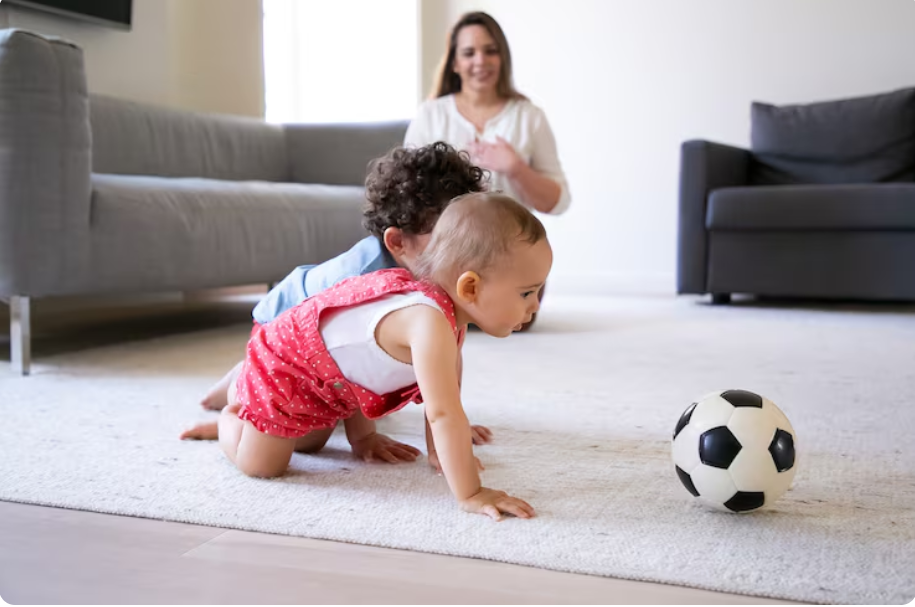
From the moment your baby is born, their world is a flurry of rapid changes and growth. As a parent, there is nothing quite like the thrill of watching your little one experience the world for the first time. You eagerly anticipate the big moments—the first smile, the first laugh, and of course, those major physical breakthroughs like rolling over, sitting up, and taking those historic first steps.
These physical achievements are known as gross motor milestones. While it is easy to view them simply as exciting photo opportunities, each milestone represents a massive, complex leap in your baby’s neurological, muscular, and skeletal development.
Every child develops on their own timeline, but understanding the natural progression of movement can help you support your baby’s journey. Let’s explore what motor milestones look like, why the sequence matters, and how specialized Infant Motor Milestone Development Physiotherapy support can help your baby build a strong foundation for life.
The Natural Progression of Infant Motor Milestones
Infant motor development follows a predictable pattern, moving from “head to toe” (cephalocaudal) and from the “inside out” (proximodistal). This means a baby must gain control of their head and neck before they can stabilize their trunk, and they must control their core before they can precisely coordinate their arms and legs.
Here is a general roadmap of the major physical milestones during a baby’s first year:
- 0 to 3 Months (Head Control & Extension): Your baby begins lifting their head during tummy time, clearing their chin from the floor, and bringing their hands to their mouth while lying on their back.
- 4 to 6 Months (Rolling & Core Strength): Your baby discovers how to roll from their tummy to their back, and eventually from their back to their tummy. They begin pushing up through straight arms during tummy time and may begin sitting with brief support.
- 7 to 9 Months (Independent Sitting & Exploring): Your baby masters sitting completely unsupported, freeing up their hands to play with toys. They begin pivoting on their bellies, army crawling, or pushing themselves up onto hands and knees.
- 10 to 12 Months (Mobility & Standing): Your baby transitions into a true hands-and-knees crawl. They begin “cruising” (walking while holding onto furniture), standing briefly without support, and eventually taking their independent first steps.
Why the Sequence Matters More Than the Speed
In today’s fast-paced world, it is tempting to view physical development as a race. Parents often wonder, “Is my baby walking yet?” or “Should they be crawling by now?” However, in pediatric therapy, the quality and sequence of movement are far more important than the exact age a milestone is reached.
For example, crawling on hands and knees is a profoundly important milestone. It requires cross-body coordination (moving the opposite arm and leg together), which strengthens the connection between the left and right hemispheres of the brain. It also builds shoulder stability, hip strength, and hand arch development—foundational physical traits that your child will rely on later for tasks like running, climbing, and even holding a pencil at school.
Skipping a milestone or finding an “atypical” way to move (such as asymmetrical bottom-shuffling or dragging one side of the body) can sometimes point to underlying muscle imbalances that are worth addressing early.
Signs Your Baby Might Need Support
Because there is a wide range of what is considered “normal” development, it can be difficult for parents to know when to seek professional guidance. Consider scheduling an evaluation for Infant Motor Milestone Development if you notice any of the following:
- Your baby strongly dislikes tummy time and cannot lift their head by 3 to 4 months.
- Your baby consistently favors one side of their body, rolls only over one shoulder, or reaches predominantly with only one hand.
- Your baby feels exceptionally stiff (high muscle tone) or unusually floppy like a “ragdoll” (low muscle tone).
- Your baby has not attempted to roll by 6 months, sit independently by 9 months, or crawl/move across the floor by 10 to 11 months.
- Your baby seems frustrated by their inability to move or frequently gets “stuck” in one position.
How Pediatric Physiotherapy Supports Motor Development
Many parents assume physical therapy is only for injuries, but pediatric physiotherapy for infants is entirely focused on developmental guidance, play, and exploration.
At Butterfly Therapy, we don’t force babies to hit targets; instead, we clear the physical obstacles in their way so they can naturally discover the joy of movement. Specialized development sessions involve:
1. Play-Based Strength Building
We use specialized toys, mirrors, and sensory engagement to encourage your baby to reach, kick, push, and balance. By making exercises feel like a game, your baby builds the core, neck, and limb strength needed for their next developmental leap.
2. Identifying and Resolving Imbalances
If a baby is struggling to roll or sit, it is often due to a subtle tightness or weakness on one side of the body. Our therapists identify these root causes and use gentle, hands-on techniques to restore symmetry and flexibility.
3. Motor Planning and Coordination
Sometimes a baby has the physical strength to move but hasn’t figured out the “blueprint” of how to coordinate their limbs. We gently guide their bodies through the correct movement patterns—such as the weight shifts required to sit up or transition into a crawl—so their brains can map out the sequence.
4. Home Environment Coaching
You are your baby’s ultimate cheerleader and coach. We partner with you to modify your home environment, select the best developmental toys, and teach you specific ways to hold, carry, and play with your baby to maximize their physical potential every single day.
Conclusion: Empowering Your Baby’s Unique Journey
Every infant’s developmental path is entirely unique. Infant Motor Milestone Development is not about forcing a child to hit a specific checklist ahead of schedule; it is about ensuring they have the strength, balance, symmetry, and confidence to explore their world without limitations.
Early intervention takes advantage of your baby’s incredibly adaptable developing brain and nervous system. By identifying and addressing minor movement hurdles early, you give your child the strongest possible foundation for a lifetime of active, confident, and joyful movement.
If you have questions about your baby’s physical progress or want expert guidance to ensure they are on the right track, don’t hesitate to reach out. Partnering with a dedicated pediatric physiotherapist provides the personalized care, tools, and peace of mind you need to confidently support your little one every step of the way.